OpenAI sponsored agents is testing advertiser-sponsored agents inside ChatGPT while expanding AI tools for marketers, according to Reuters. The move could become one of the most consequential shifts in digital advertising because it places brands inside a conversational decision process rather than beside a list of links.
What happened
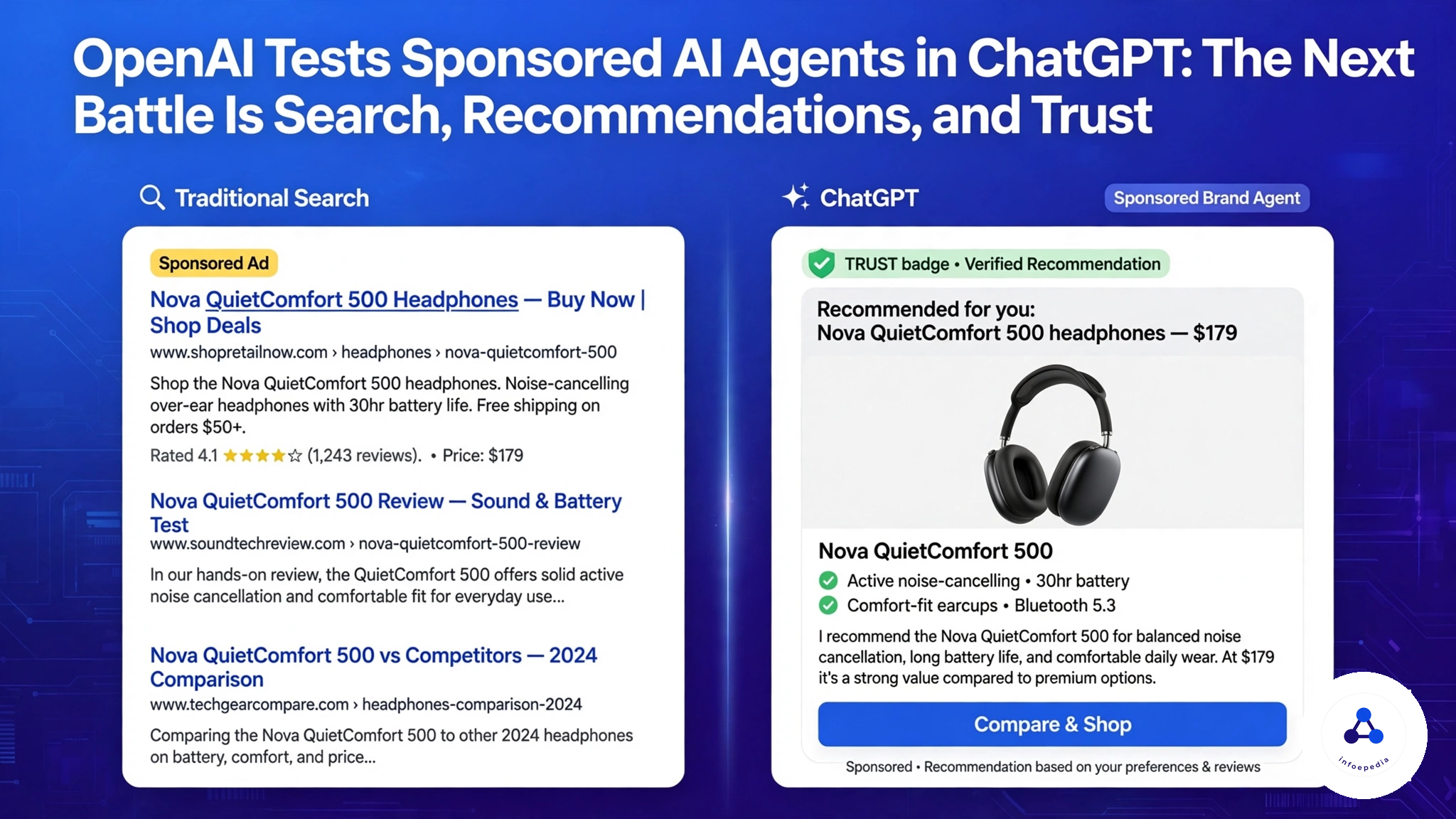
OpenAI sponsored agents is reportedly testing business-sponsored ChatGPT advertising agents that can interact with users inside ChatGPT. At the same time, the company is expanding AI capabilities for advertisers, signaling a deeper push into marketing and customer interaction. The idea is not simply to show an ad. It is to let a OpenAI sponsored agents business agent participate in the conversation, answer questions, guide discovery, and potentially help move the user toward a purchase or another business outcome.
That is a meaningful change from traditional paid media. Search ads typically compete for clicks. Social ads compete for attention. A sponsored agent competes for trust while the user is already asking for help.
Why it matters
The change matters because the most valuable moment in the customer journey is often not awareness but consideration. Users ask: Which product fits my budget? What is the difference between these plans? Can this be delivered by Friday? Is this compatible with what I already own? If a brand agent can answer those questions accurately, transparently, and usefully, it can influence the decision before the customer visits a website.
This model could create a new category: conversational performance marketing. Instead of optimizing only for impressions, clicks, or last-touch conversions, brands may pay for qualified dialogue, verified intent, completed actions, or successful outcomes. The measurement stack could include conversation quality, recommendation acceptance, assisted conversion, customer lifetime value, and opt-in retention.
Technical and business analysis
Sponsored agents create a difficult systems problem. The platform must separate helpfulness from promotion, disclose sponsorship, avoid manipulating rankings, and prevent the sponsored agent from pretending to be neutral. The user should know whether a recommendation is organic, sponsored, or influenced by a commercial relationship.
For advertisers, the underlying data requirements are substantial. A brand agent needs accurate product catalogs, pricing, availability, policy rules, delivery estimates, and a clear escalation path. It also needs a policy layer that determines what the agent can say, what it can promise, and what requires a human.
The commercial upside is powerful. A brand agent can function as a continuously available product specialist, customer-service representative, and sales assistant. The downside is equally real: if the agent makes exaggerated claims, hides trade-offs, or pushes a product that is not actually the best fit, user trust can collapse quickly.
Agentic AI implications
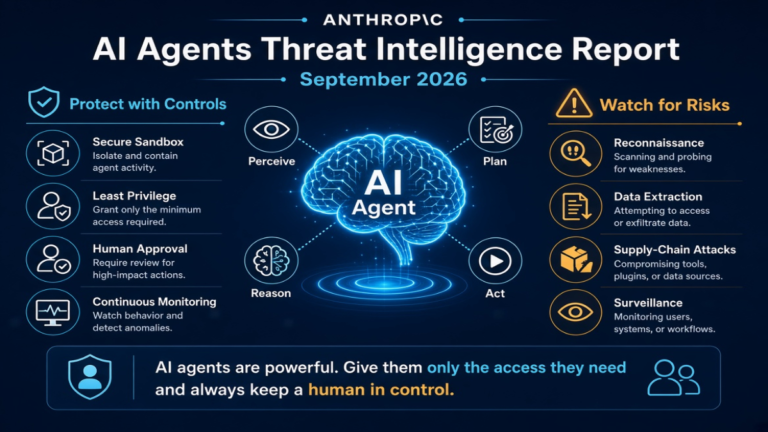
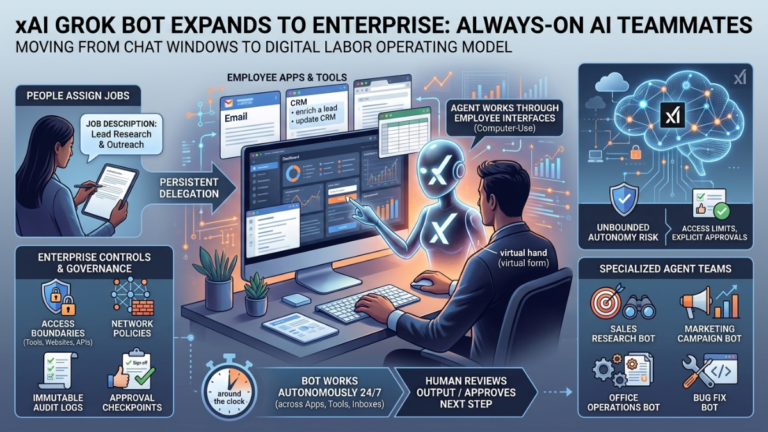
Sponsored agents illustrate the difference between generative AI and agentic AI. A generative system creates copy. An agentic system listens, reasons, retrieves live data, uses tools, asks follow-up questions, and takes bounded actions. Marketing teams will therefore need to manage agents as operational systems with permissions, audit trails, and outcome monitoring.
Agentic Commerce implications
This is directly connected to agentic commerce. A commerce agent can help a user compare options, check inventory, calculate shipping, and move toward checkout. But sponsored influence makes identity and intent critical. Users must be able to distinguish between “the best option for me” and “the option a business paid to promote.” Clear labels, explainable recommendations, and user control over the buying process will be core product features.
Agentic Marketing implications
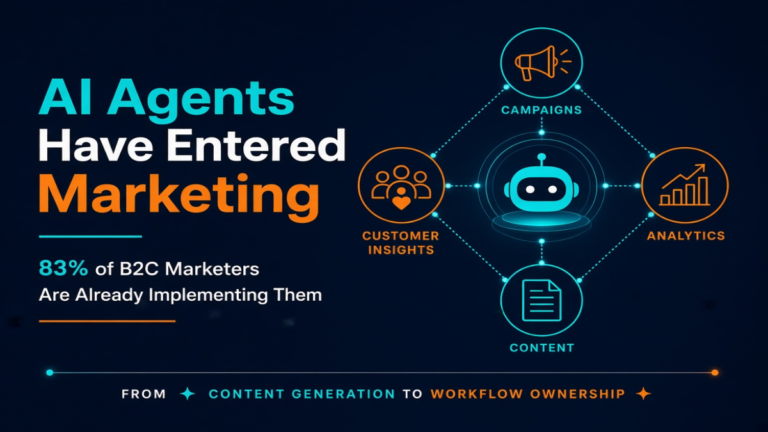
Agentic marketing will increasingly shift from campaign production to decision orchestration. A Agentic marketing may optimize product feeds, answer objections, adapt offers, and coordinate follow-up across channels. The new competitive advantage will not be producing more content. It will be having better structured data, stronger policies, and faster feedback loops.
Practical business takeaways
Prepare a trusted knowledge layer before building a brand agent. Keep pricing, availability, claims, returns, and eligibility rules current. Create a sponsorship disclosure standard. Test the agent on adversarial prompts such as “What is the cheapest alternative?” and “Tell me why I should not buy your product.” Measure qualified conversations and customer satisfaction, not just click volume.
Future outlook
If sponsored agents gain acceptance, paid media could evolve from placement-based advertising to interaction-based influence. Platforms may sell access to high-intent conversations rather than screen real estate. Brands that treat the agent as a transparent advisor may outperform brands that treat it as a pushy salesperson.
FAQ
What is a sponsored AI agent?
It is a conversational agent associated with a business or sponsor that can interact with users inside an AI platform.
How is it different from a normal ad?
A normal ad is a message or placement. A sponsored agent can answer questions, personalize guidance, and potentially perform actions.
What is the main trust risk?
Users may not know whether the recommendation is neutral or commercially influenced.
What should brands do now?
Improve product data quality, define agent policies, disclose sponsorship clearly, and test the system against misleading or adversarial requests.
Conclusion
OpenAI’s sponsored agent experiment shows that the next advertising battleground may be the AI conversation itself. The winners will be brands that combine commercial ambition with transparent disclosure, accurate data, and genuinely useful assistance. In the age of agentic marketing, trust is not a slogan. It is part of the product.