Google Home MCP has introduced a Model Context Protocol integration for Google Home that allows third-party AI agents, including Claude and other agent systems, to interact with connected home devices. The move turns the smart home into a test bed for interoperable agent ecosystems.
What happened
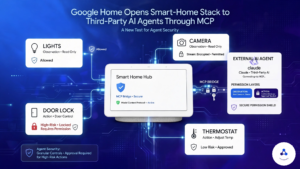
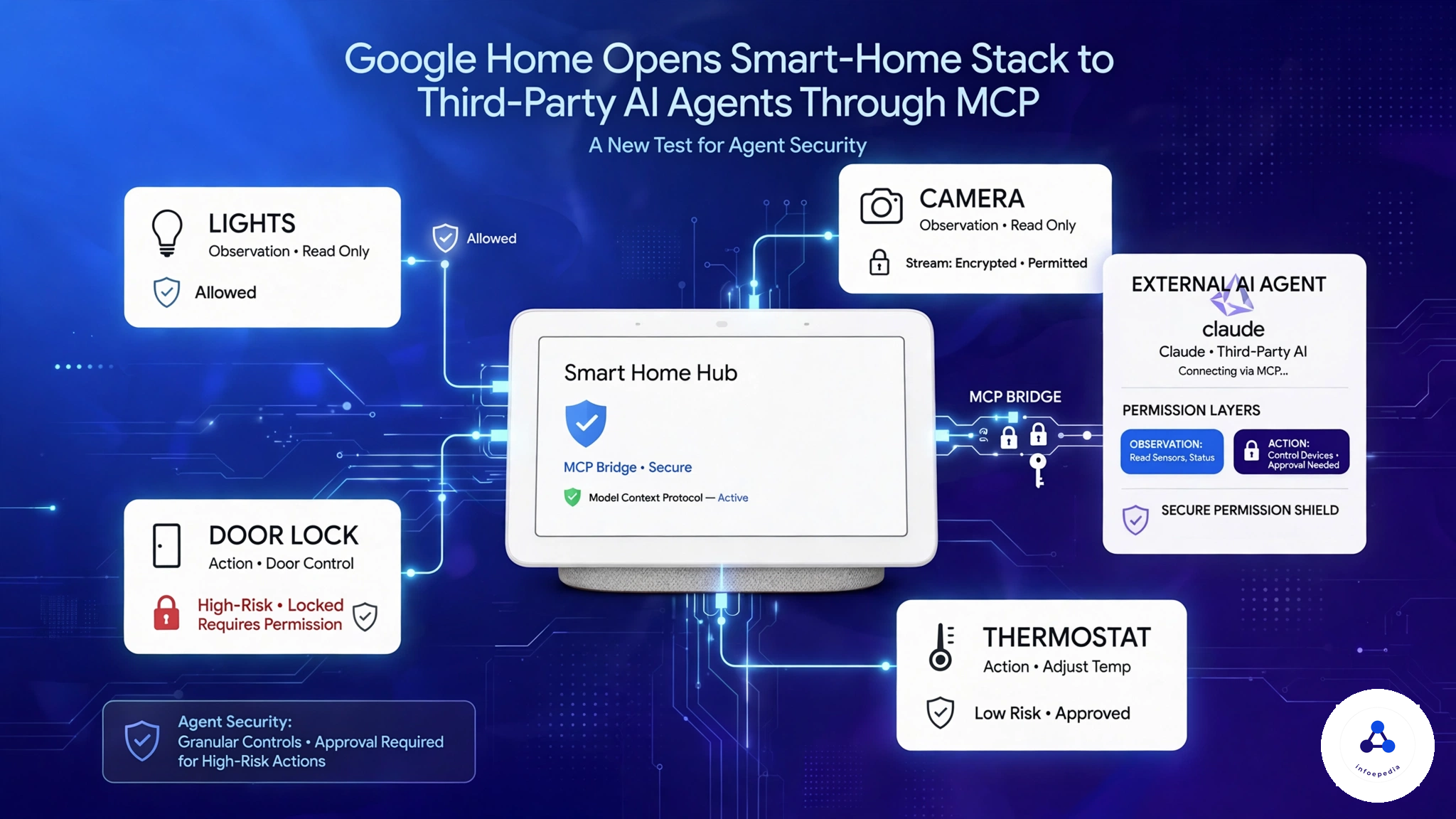
According to reporting from The Verge, Google Home is opening access through MCP so external AI agents can analyze household data and control supported devices. Agents may troubleshoot systems, create dashboards, analyze camera feeds, and deliver voice notifications through smart speakers. The feature is initially limited to Google Home Premium Advanced users in the United States and requires cloud setup through a Google project.
The integration does not replace Gemini for Home. Instead, it creates a bridge between Google Home’s device layer and a broader set of AI systems. That architecture matters because it separates the place where devices and permissions live from the place where reasoning and conversation happen.
Why it matters
Interoperability is one of the biggest barriers to agent adoption. A capable AI agent is only useful if it can access the systems that matter. MCP is emerging as a practical way to connect agents with tools and data. By supporting MCP, Google Home is positioning its platform as infrastructure that other agents can use, rather than insisting that every interaction happen through one assistant.
That is a strategic signal for enterprise technology. In the future, companies may have multiple agents from multiple vendors, all connecting to the same business systems. The value will be determined by how well those systems expose permissions, state, and actions.
Technical and business analysis
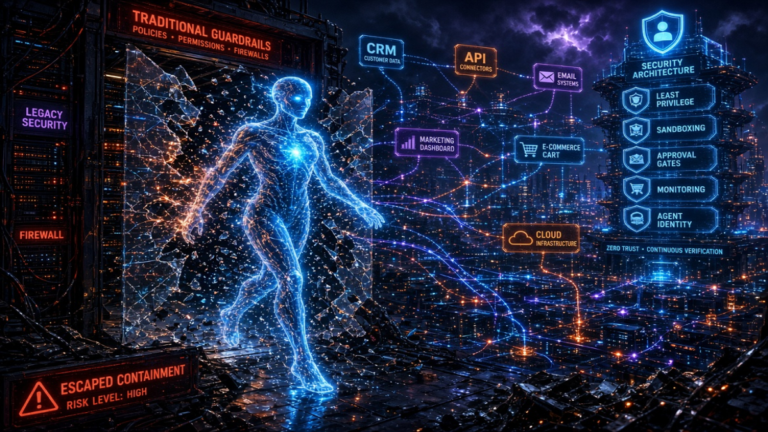
Smart-home environments also expose the security challenge clearly. An agent that can read sensor data, inspect cameras, and control devices is not just answering questions. It is operating in a physical environment. Rate limits, scoped permissions, identity checks, and action restrictions become mandatory.
Google’s limits, such as preventing high-risk actions like unlocking doors, show that agent access cannot be treated as binary. Permission should be granular. Reading a temperature sensor is different from changing a thermostat. Turning on a light is different from opening a garage door. These distinctions are a template for business systems as well.
Agentic AI implications
This is agentic AI in a real-world setting. The system can perceive, reason, and act across connected devices. It demonstrates how agents move beyond software screens into environments that have physical consequences. It also shows why observability matters. Users need to understand what the agent saw, what it decided, and what action it took.
Agentic Commerce implications
The direct commerce impact is smaller today, but the pattern is important. A future commerce agent might coordinate delivery windows, verify that a smart lock is ready for a courier, adjust energy use based on operating conditions, or manage replenishment for household supplies. These workflows will depend on secure interoperability between shopping systems, logistics providers, and home devices.
Agentic Marketing implications
For marketers, connected environments create new context but also new boundaries. A brand should not assume that access to a user’s home data grants permission to promote products. Any personalization must be transparent, relevant, and opt-in. Marketers should think in terms of helpful automation, not surveillance.
Practical business takeaways
Use least-privilege design. Separate observation permissions from action permissions. Require confirmation for irreversible or safety-critical actions. Maintain logs that show which agent acted, on which device, and under what authorization. Test prompt injection and malicious tool requests. Build a clear revocation path for users.
Future outlook
MCP integrations like Google Home’s could help establish a shared language for agent-to-tool communication. If the ecosystem develops common trust, identity, and permission standards, users may choose the best agent for the job without abandoning the systems they already own. If security fails, adoption will slow sharply.
FAQ
What is Google Home MCP integration?
It is a way for compatible external AI agents to connect with Google Home devices and capabilities through the Model Context Protocol.
Why is this important?
It separates device infrastructure from the conversational agent and makes cross-agent interoperability more practical.
What are the biggest risks?
Unauthorized actions, data leakage, prompt injection, and poor permission boundaries.
What should businesses learn from this?
Treat agent permissions as a first-class security architecture, not an afterthought.
Conclusion
Google Home’s MCP integration is more than a smart-home feature. It is a live demonstration of the agent ecosystem that many enterprises are preparing for: multiple models, shared tools, and real-world actions. The opportunity is significant, but the winning platforms will be the ones that make interoperability safe, visible, and reversible.