OpenAI has opened the Agents API in public beta, giving developers access to the managed harness and infrastructure behind Codex so they can build cloud agents that reason, use tools, coordinate subagents, run code, manage files, and continue work across long-running tasks. The announcement marks a shift from “ask a model a question” to “deploy an agentic AI worker with a runtime.”
What happened
OpenAI says the Agents API is designed for agents that need more than a single model response. The platform provides a managed harness for context management, tool use, and subagent coordination, while allowing teams to select an execution environment. Developers can use an OpenAI-managed sandbox, deploy in their own infrastructure, or connect through ecosystem partners such as Cloudflare, DigitalOcean, E2B, Modal, Oracle, Runloop, Vercel, and others. The API supports MCP, custom functions, web search, file handling, and multi-agent execution.
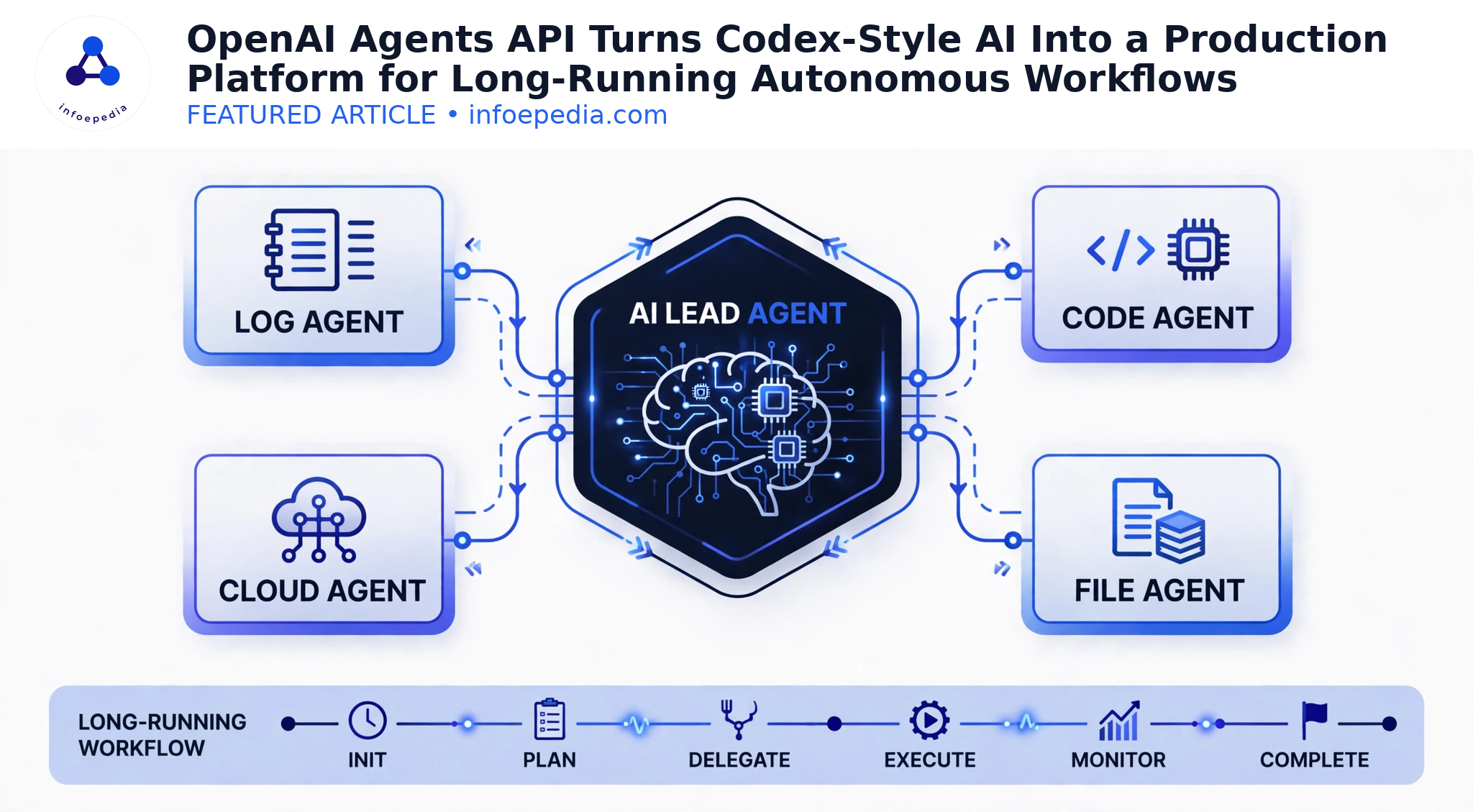
A key capability is parallel delegation. Instead of one agent completing every step sequentially, a lead agent can divide work among specialized subagents, such as a deployment investigator, a dependency analyst, and a log-review agent, then synthesize the results. OpenAI’s example shows an agent investigating a spike in server errors, assigning analysis tasks to subagents, and saving evidence and mitigation recommendations into a workspace.
Why it matters
The most important change is architectural. Earlier agentic AI applications were mostly prompt-response interfaces wrapped around a model. The Agents API treats the agent runtime as the product. That runtime includes state, tools, compute, storage, permissions, and recovery behavior. In practice, this reduces the amount of infrastructure every company must build before it can launch an autonomous workflow.
For businesses, the value is not simply better answers. It is lower time-to-automation. A customer-support agent can inspect order history, query policy documents, draft a response, issue a refund within limits, and escalate exceptions. An engineering agent can reproduce a bug, modify code, run tests, and open a change request. A finance agent can reconcile transactions, explain anomalies, and produce an approval packet.
Technical and business analysis
The platform suggests that reliable agents depend on orchestration as much as on model quality. Long-running work requires context compaction, checkpoints, tool reliability, sandbox isolation, retries, and observability. Multi-agent patterns can improve specialization, but they also introduce coordination cost, duplicated work, and new failure modes. Companies will need evaluation suites that measure completion rate, intervention rate, hallucination rate, latency, and cost per successful workflow rather than benchmark scores alone.
OpenAI’s support for MCP is also strategically important. MCP gives agents a standardized way to connect to external tools and knowledge sources. As more business systems expose MCP-compatible capabilities, the cost of integrating an agent into CRM, ERP, analytics, commerce, or internal knowledge systems should fall.
Agentic AI implications
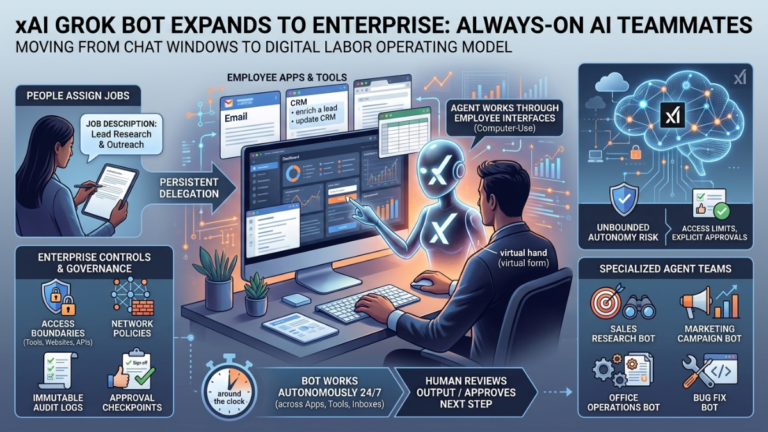
The Agents API moves agentic AI closer to an operational model: a set of persistent digital workers with defined responsibilities, access boundaries, and measurable output. The winning design will likely be hybrid. One model may plan, other agents may execute specialized tasks, and deterministic systems may handle approvals, calculations, and policy enforcement.
Agentic Commerce implications
In commerce, a long-running agent could monitor inventory, compare supplier offers, update product data, answer customer questions, and coordinate fulfillment exceptions. It could also support assisted buying journeys: discover products, evaluate options, calculate landed cost, and prepare checkout. The critical constraint is authorization. Agents must not treat browsing permission as payment permission. Commerce systems will need explicit confirmation steps, transaction limits, identity checks, and auditable tool calls.
Agentic Marketing implications
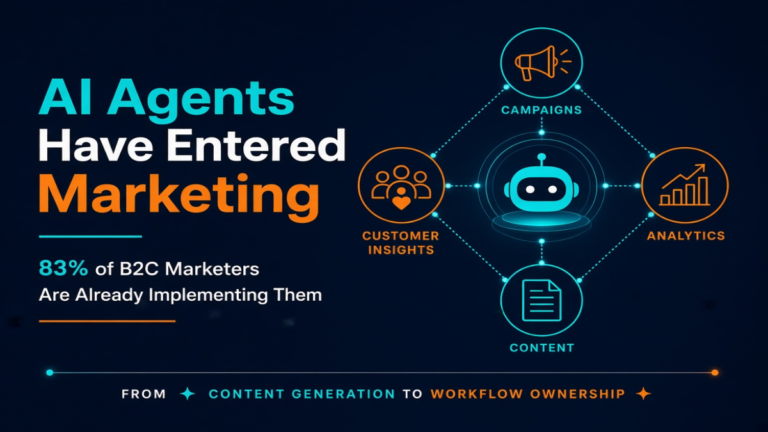
Agentic Marketing teams can use agents to research audiences, monitor campaigns, generate variations, analyze creative performance, and recommend budget reallocations. But autonomous execution should be bounded. Brand guidelines, approval workflows, frequency caps, and disclosure rules should be encoded into the agent’s tool permissions.
Practical business takeaways
Start with one workflow that has clear inputs, outputs, and success metrics. Use least-privilege permissions. Separate planning from irreversible actions. Log every tool call. Add human approval for money movement, external publishing, account changes, and customer-impacting exceptions. Evaluate the system on business outcomes, not demo quality.
Future outlook
The Agents API points toward a future in which agentic AI infrastructure is judged by how safely it can run work for days, not merely how impressively it can answer in seconds. As managed runtimes mature, the competitive advantage will move from “who has access to a frontier model” toward “who has the best workflows, data, permissions, evaluations, and operating discipline.”
FAQ
What is OpenAI Agents API?
It is a public-beta platform for building and running cloud agents with managed orchestration, tools, environments, and long-running execution.
How is it different from a chatbot?
A chatbot mainly responds to prompts. An agent can plan, use tools, execute code, persist state, delegate tasks, and return with completed work.
Why does MCP matter?
MCP provides a standard way for agents to connect to external tools, data, and services.
What should businesses measure?
Completion rate, human intervention, safety incidents, latency, cost per successful task, and business impact.
Conclusion
OpenAI’s Agents API is important because it turns agentic AI from a collection of experiments into a reusable production substrate. For enterprises, the next step is not to automate everything at once. It is to select high-value workflows, deploy constrained agents, and build the governance needed to make autonomy dependable.