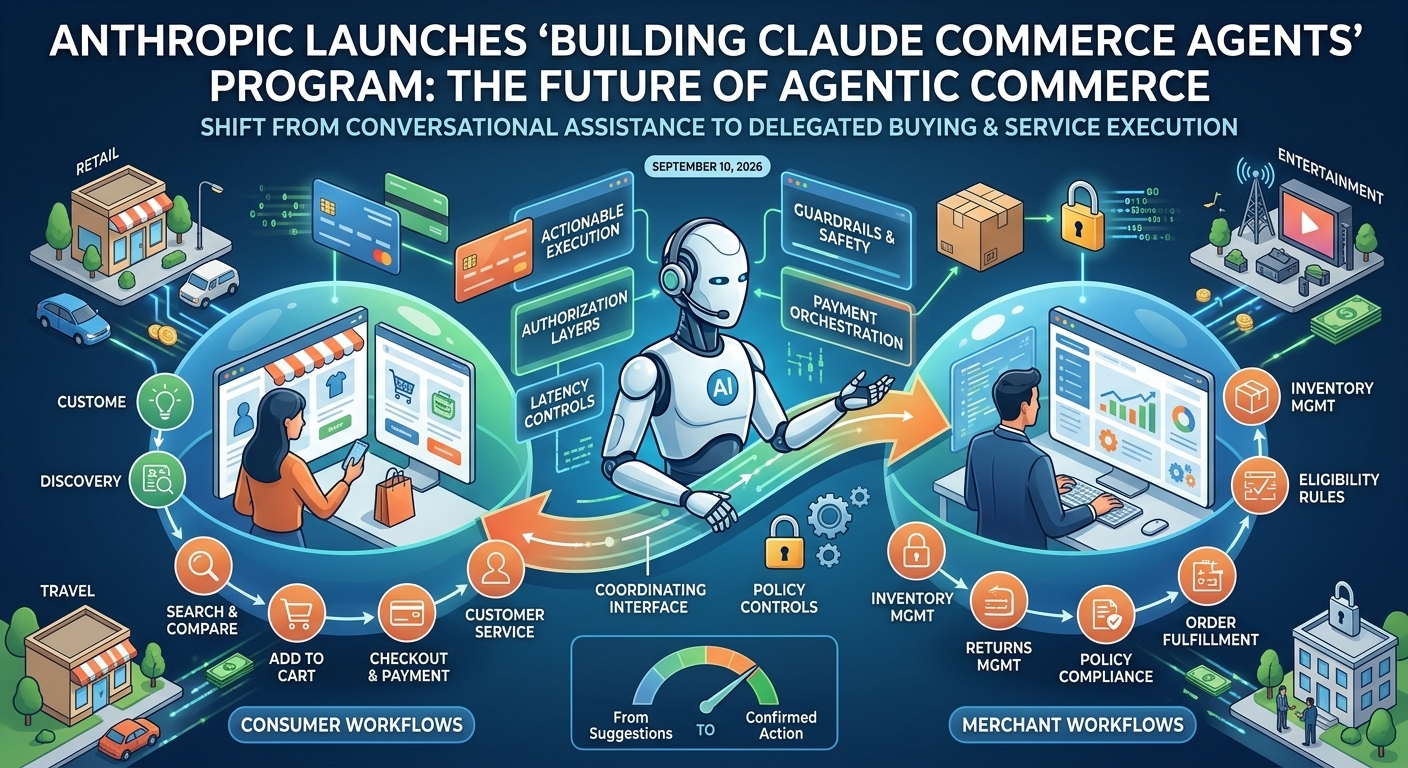
Anthropic is putting a stronger commercial stake in agentic commerce with its “Building Claude Commerce Agents” program, announced for September 10, 2026. The company says it is sharing blueprints and reference implementations for consumer and merchant agents across retail, travel, telecom, and entertainment. The news hook is that the next wave of commerce AI is being designed around action, authorization, latency, and guardrails not just conversational product recommendations.
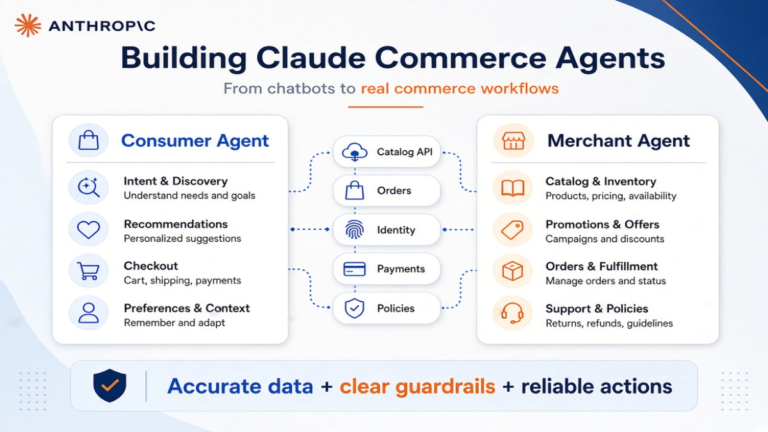
What happened is that Anthropic presented a practical framework for building commerce agents that can operate across customer and merchant workflows. The company’s session focused on harnesses, deployment patterns, authentication, latency, and industry-specific use cases. Those details are important because commerce is where the gap between “helpful answer” and “safe action” becomes most visible. A shopping assistant can suggest a product. A commerce agent may need to check inventory, compare prices, apply eligibility rules, request approval, complete a purchase, and support the customer afterward.
Why it matters is that retail and service businesses are preparing for a world where customers may delegate more of the buying journey to software. An agent could become the interface between a consumer and a network of merchants. That changes discovery, merchandising, checkout, advertising, and customer service. The competitive advantage may shift from winning a click to becoming the most trusted and machine-readable option inside an agent’s decision process.
Technically, commerce agents need more than a language model. They need structured product data, identity and permission layers, payment orchestration, inventory APIs, policy engines, fraud controls, and observability. They also need to handle ambiguity. A customer may ask for “the best laptop for travel under $1,000,” but the agent must translate that into constraints, search across sources, compare tradeoffs, and explain why one option was chosen. If it takes action, the system must know what requires confirmation and what can be automated.
For Agentic AI, this is a strong example of specialized workflow design. The agent’s value comes from coordinating tools and state across a long process. It must remember preferences, maintain a cart or itinerary, recover from failed calls, and return with a decision-ready summary. That is why Anthropic’s emphasis on harnesses and guardrails matters. Commerce agents are operational systems, not simple chat interfaces.
For Agentic Commerce, the implications are direct. Merchants will need product catalogs optimized for machine interpretation, transparent policies, reliable availability, and APIs that expose product, pricing, fulfillment, and return information. Brands may also need agent-facing merchandising strategies: product data quality, reputation signals, structured reviews, and clear differentiation. In this environment, “AI visibility” becomes a measurable commercial asset.
Agentic Marketing will also change. Marketers may need to influence how agents evaluate brands rather than only how humans respond to ads. This could increase the importance of factual product claims, comparison-friendly content, verified reviews, policy clarity, and high-quality feeds. Campaigns may become more personalized and outcome-oriented, with agents selecting offers based on customer intent and business rules.
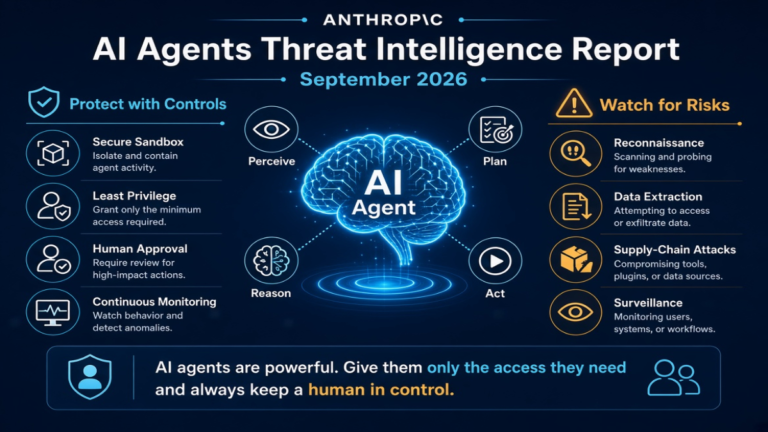
Practical business takeaways: audit catalog data, expose real-time inventory, define approval thresholds, instrument every step of the buyer journey, and create explicit policies for refunds, discounts, and substitutions. Test the agent with adversarial cases such as conflicting prices, out-of-stock products, ambiguous identity, and shipping delays. Make the handoff to a human obvious when risk or uncertainty is high.
The future outlook is that commerce platforms will compete to become trusted execution layers for agents. The winning brands will not simply have attractive websites; they will have reliable data, predictable policies, and systems that agents can safely call.
FAQ:
What are Claude Commerce Agents? They are agentic consumer and merchant workflows built around shopping and service tasks. How are they different from chatbots? They can reason across tools, policies, and transaction steps. What do merchants need? Structured data, APIs, authentication, payment controls, and clear business rules. Will human marketers disappear? No, but their work will increasingly include making brands legible and trustworthy to AI decision systems.
Conclusion:
Anthropic’s commerce initiative signals a shift from conversational assistance to delegated buying and service execution. The next battleground in e-commerce will be trust, interoperability, and the ability to complete the job safely.